



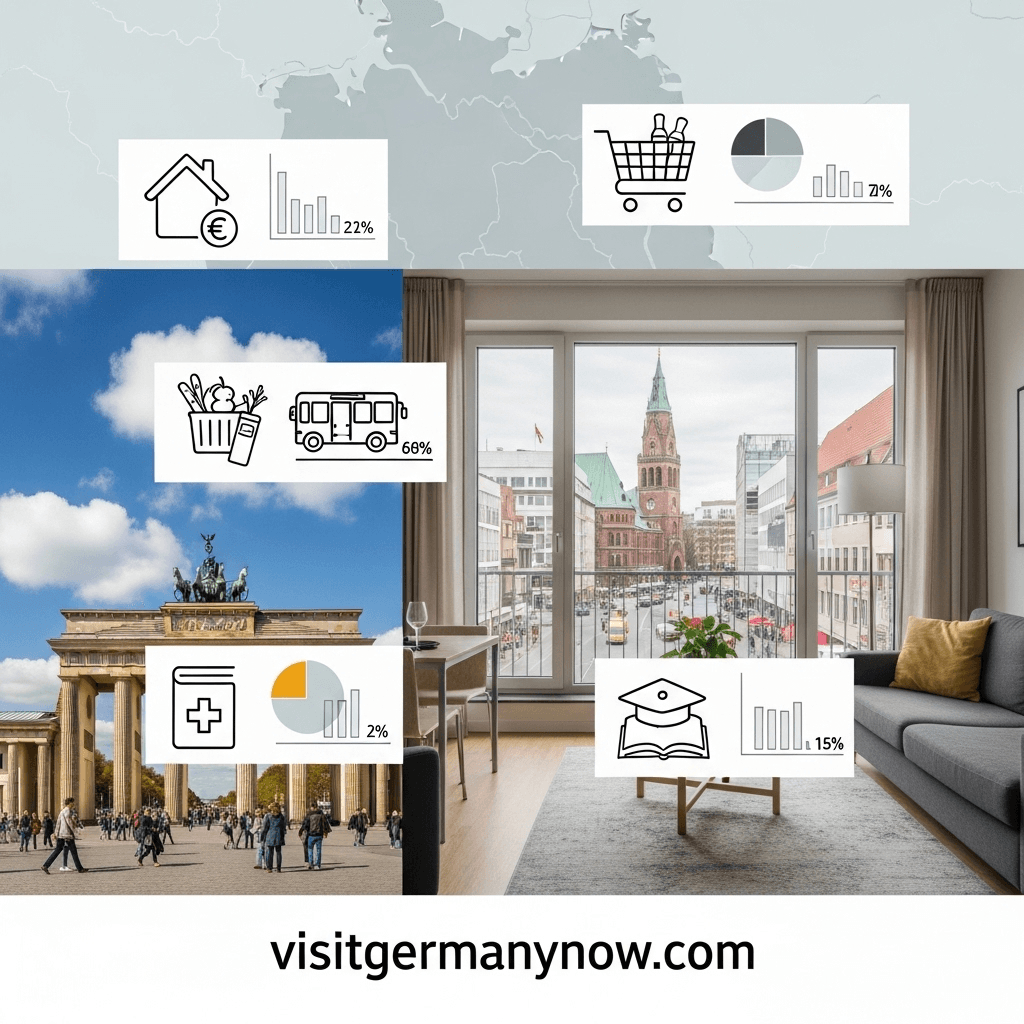
Cost of Living in Germany 2025: Your Ultimate Guide to Monthly Expenses & City Budgets
Are you planning to move to Germany for work, study, or retirement? Understanding the cost of living in Germany is essential for effective budget planning. This comprehensive guide breaks down average monthly expenses, highlights the differences between major German cities, and provides valuable insights for expats and newcomers.
How Much Does it Cost to Live in Germany?
The overall cost of living in Germany for a single person can range from €1,200 to €3,000 per month, largely depending on your chosen city and lifestyle. Key expenses include accommodation, food, transportation, and mandatory health insurance.
Detailed Breakdown of Average Monthly Costs in Germany (for a Single Person):
- Rent in Germany: This is often the largest expense. A one-bedroom apartment in a city center typically costs between €600 and €1,500 per month. Remember to differentiate between “Kaltmiete” (cold rent, excluding utilities) and “Warmmiete” (warm rent, including some utilities).
- Utilities & Internet: Budget approximately €200–€350 per month for electricity, heating, and water. Internet services average around €35 per month.
- Groceries: A single person can expect to spend €200 to €300 monthly on food and household essentials. Germany offers a good range of supermarkets, from budget-friendly options to more upscale stores.
- Public Transportation: Germany boasts an excellent public transport network. A monthly pass usually costs €60 to €100. The popular “Deutschlandticket” offers unlimited nationwide travel on regional and local transport for just €49 per month, a fantastic option for saving money on travel.
- Health Insurance in Germany: Health insurance is mandatory. Public health insurance premiums are income-based, while private insurance varies. Students under 30 often pay around €120 per month for a flat rate.
- Other Essential Expenses:
- Public Broadcasting Fee (Rundfunkbeitrag): A compulsory €18.36 per month fee.
- Dining Out: A meal at an average restaurant typically costs €10-€20.
Cost of Living in German Cities: Expensive vs. Affordable
The cost of living index in Germany is significantly influenced by location. Major economic hubs and cities in Southern Germany tend to be pricier.
Most Expensive Cities in Germany:
- Cost of Living in Munich: Consistently ranked as the most expensive city in Germany. Rent for a central one-bedroom apartment can easily exceed €1,500.
- Cost of Living in Frankfurt: As a major financial center, Frankfurt is also among the priciest cities for living and accommodation.
- Cost of Living in Berlin: While historically more affordable, Berlin’s cost of living has been steadily rising. It remains less expensive than Munich or Frankfurt but is a significant European capital.
More Affordable Cities in Germany:
- Cost of Living in Leipzig: Offers significantly lower rents and overall living expenses, making it an attractive option for students and those seeking a lower budget.
- Cost of Living in Dresden: Another Eastern German city known for its more affordable housing and daily costs.
- Cost of Living in Erfurt: Provides lower housing and general living costs, contributing to a more budget-friendly lifestyle.
Average Salary in Germany: What to Expect
To better gauge your budget, consider the average income. The average gross annual salary in Germany for a full-time employee is approximately €49,260. After accounting for taxes and social security, a gross salary of €50,000 might result in a net income of around €2,560 per month for a single person.
Smart Tips to Save Money on Living Costs in Germany:
- Utilize Public Transport: Invest in a monthly pass or the Deutschlandticket.
- Cook at Home: Eating out frequently can quickly add up.
- Explore Student Discounts: If you’re a student, take advantage of numerous student benefits.
- Consider Shared Flats (WG – Wohngemeinschaft): A popular and cost-effective accommodation option.
By understanding these factors, you can effectively plan your budget and enjoy your time in Germany without financial stress.